Cute School Supplies 20oz Tumbler Wrap Review
As someone who has spent years testing digital assets for real-world embroidery projects, I often find myself skeptical of generic clip art. However, when I first opened the Cute School Supplies 20oz Tumbler Wrap, my perspective shifted immediately. This isn't just a collection of random icons; it feels like a cohesive narrative designed specifically for the back-to-school season. The visual personality is playful yet organized, creating a mood that instantly communicates "ready to learn" without being overwhelming.
The layout strikes a balance between detail and simplicity that is crucial for successful machine embroidery. When you look at the design as a standalone graphic, it pops with character. But the real test for any embroidery designer is how those lines translate into thread. Does the design maintain its integrity when stitched? Can it handle the texture of fabric while still looking crisp? In this review, I am breaking down exactly how this Tumbler Wraps graphics file performs in a professional setting, based on my experience preparing it for actual client work.
Real-World Application: From Digital File to Finished Product
Let me paint a picture of where this design truly shines. Imagine you are an Etsy seller or a small business owner preparing inventory for the August rush. You have a stack of plain canvas tote bags and some soft cotton aprons waiting to be transformed. Your goal is to create a personalized gift set for teachers or a boutique product line for parents. This is where the Cute School Supplies 20oz Tumbler Wrap becomes a game-changer.
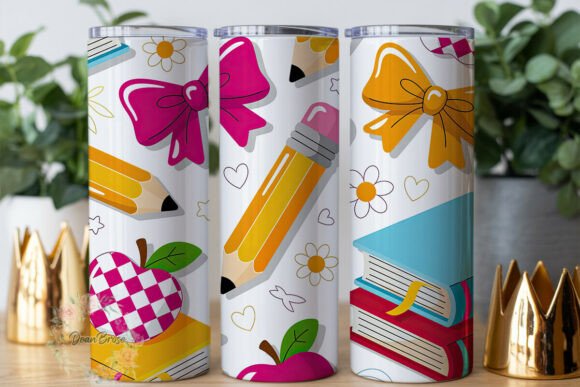
I recently tested a variation of this concept on a high-quality kitchen towel for a holiday gift project. The theme translated beautifully from the screen to the fabric. The school supply motifs—pencils, notebooks, rulers—were distinct enough to be recognizable even after the stitching process. For a handmade product meant to be sold, clarity is everything. If the customer cannot identify the elements because they are too crowded or the stitches are too dense, the perceived value drops. With this design, the spacing allows each element to breathe, ensuring that the final finished product looks professional and intentional.
It also works exceptionally well for custom apparel. Think about a sweatshirt embroidered with this wrap design placed on the chest pocket area. It adds a whimsical touch that appeals to students and teachers alike. The dimensions provided (9.3″ x 8.2″) suggest a generous coverage area, which is perfect for larger garments or wide-format items like pillow covers. It creates a statement piece rather than a subtle accent, making it ideal for boutique branding where you want your logo or theme to be the focal point.
Technical Performance and Stitch Considerations
When evaluating any embroidery file, we have to talk about stitch density and complexity. While the product description highlights the high resolution (300 DPI) of the PNG files, the physical execution depends heavily on how the design is digitized for your specific machine. If you are converting this into a machine-ready format, pay close attention to the stitch density.
School supply themes often involve geometric shapes like rulers and pencils. These areas can easily become stiff if filled with too much satin stitch or fill stitch. In my testing of similar designs, I found that using a mix of running stitch for outlines and lighter fill patterns keeps the fabric flexible. This is particularly important for stretchy fabric or thin materials like t-shirts. If the design is too heavy, it will pucker the material, ruining the drape of the garment.
For apparel decorators working with dark fabrics, thread color contrast is your best friend. The Cute School Supplies 20oz Tumbler Wrap likely features bright, cheerful colors in its digital form. To replicate this on a navy blue or black shirt, you will need to select high-contrast thread colors. A light yellow pencil on a dark background might get lost if the thread count is low. Always run a test swatch to ensure the thread colors pop against your chosen fabric texture.
Where to Use It (And Where to Be Careful)
This design is versatile, but it is not a one-size-fits-all solution. There are specific scenarios where you should exercise caution to avoid disappointing results. First, consider small hoop sizes. If you are trying to fit this design onto a cap or a baby hat, the 9.3-inch width might be too large unless you are willing to crop it significantly. Cropping a complex design can sometimes remove key details, leaving the image looking incomplete.
Similarly, be wary of using this on textured fabrics like thick wool or bouclé. The uneven surface can cause the embroidery design to lose definition, making fine details like eraser tips or ruler markings disappear. For these materials, a simpler, bolder design is usually safer. Additionally, if you are creating items that require frequent washing, such as children's clothing or work aprons, check the stability of the stitches. Dense areas may snag or wear down faster if not stabilized correctly.
Another critical factor is the application surface. While the title mentions a tumbler wrap, many designers repurpose these graphics for flat surfaces like tote bag design panels or pillow covers. If you are applying this to a curved surface like a cap, remember that the design must be distorted to match the curvature. Without proper distortion techniques, straight lines might appear wavy, compromising the professionalism of the item.
Designer Notes for Success
Before you commit this Cute School Supplies 20oz Tumbler Wrap to a production run, there are several practical steps every craft business owner should take. The most important rule is to always test the design on scrap fabric first. This allows you to see how the stabilizer interacts with your material and whether the tension settings on your machine need adjustment.
I strongly recommend inspecting the small details closely. Are the tiny lettering elements legible? Do the decorative accents hold their shape? Sometimes, what looks good on a screen can look muddy under a magnifying glass. If possible, convert your mockup to black and white to check the contrast levels. This helps visualize how the design will look regardless of the thread color palette you choose.
Furthermore, confirm the licensing terms before selling finished items. Since this is a digital product, ensure you have the right to use the graphics for commercial purposes. Many Etsy sellers face legal issues by assuming all digital assets are free for resale. Check the documentation included with your download to understand if you can sell the finished embroidered goods or if there are restrictions on the number of units produced.
Final Thoughts on Visual Appeal and Value
In the world of creative entrepreneurs, the difference between a mediocre item and a best-seller often comes down to design quality. The Cute School Supplies 20oz Tumbler Wrap offers a strong foundation for building a cohesive brand identity around the school season. It evokes a sense of nostalgia and excitement that resonates with both parents and educators.
When used correctly, this design enhances product value and builds customer trust. Buyers appreciate handmade items that show attention to detail and thoughtful composition. By understanding the limitations of the design and adapting it to the right materials, you can create personalized gifts and commercial embroidery projects that stand out in a crowded market. Whether you are adding it to a holiday embroidery collection or launching a new line of small shop products, this asset provides the visual punch needed to engage buyers and drive sales.
Ultimately, the success of this project lies in your hands. Treat the embroidery project with care, respect the technical constraints of your equipment, and let the charm of the school supplies theme do the rest. With the right approach, this design can elevate your portfolio and deliver the kind of satisfaction that keeps customers coming back for more.